
It Works !
Houston, we have a Diving Whale

Remember where we left off at the end of the last post? Our humpback whale diving model was only producing the perfect picture of research frustration :
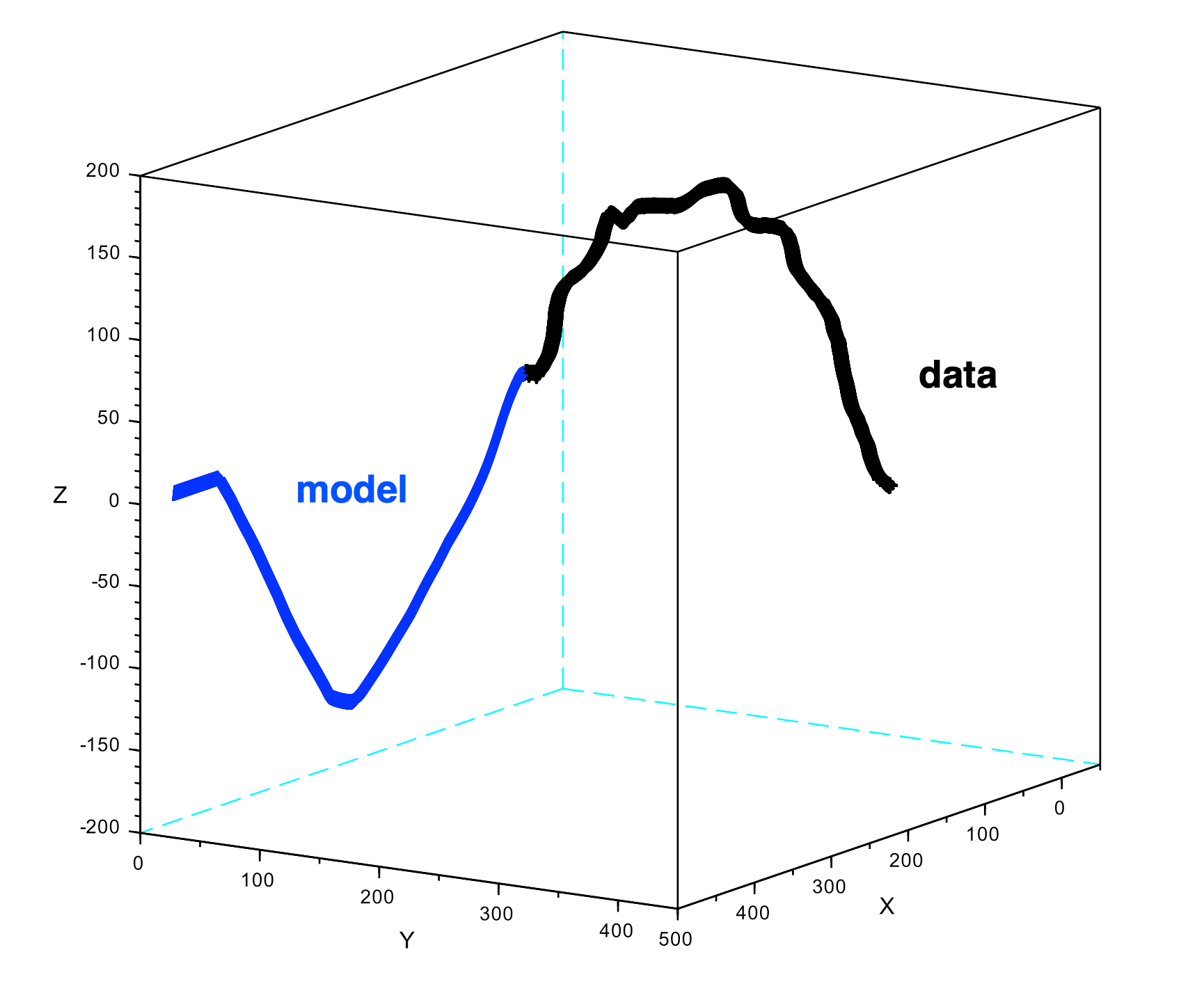
We were struggling to keep the whales oriented correctly. We were unhappy with how we had to constrain conditions to generate only approximatively, successful dives.
We were frustrated with how imprecise the dives simulations were, their sketchy energy management and the high number of "drownings" (failure to return to surface). After about 8 months of work, it was still a messy, unruly code.
So, we decided to start over. At the beginning of January, we started re-writing everything. We replaced thousands of lines of code. We abandoned all the usual tools of behavioural ecology (ethograms, optimal diving strategies and the physiological threshold paradigm) for another decision method based on a neural network.
And now, only a scant 4 weeks later, we can finally say: VICTORY!
We have created a biologically functional 'whale' entity in the model. In other words, an in silico diving whale.
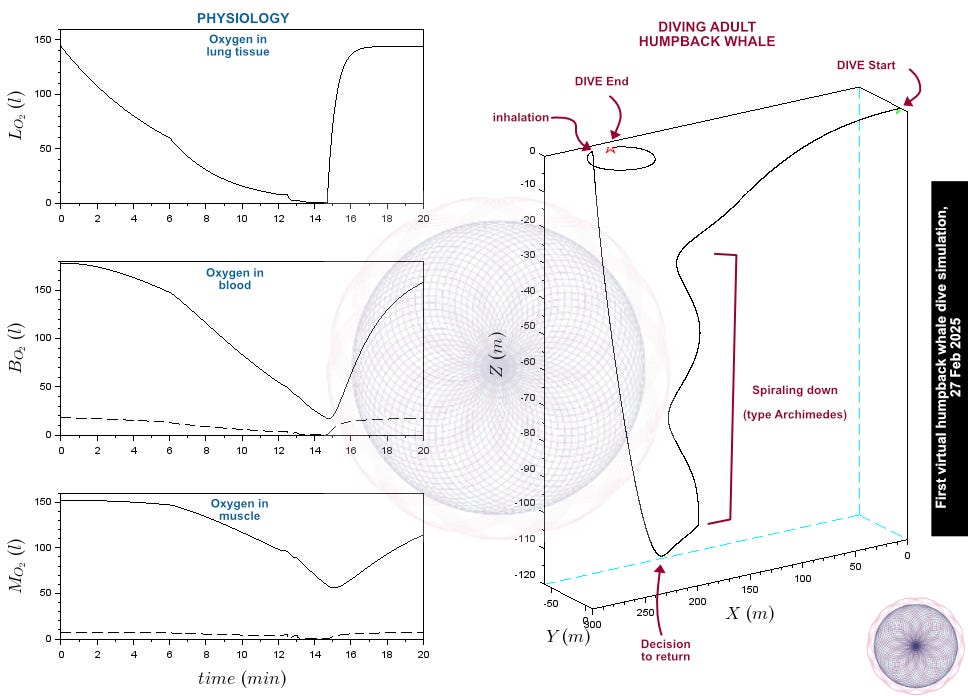
The whale entity in our model now has something akin to an autonomous existence. It has developed its own (Artificial) Intelligence about how to ensure its survival. It uses its physiological state and some features of its proximal environment to decide for itself when to return to the surface. We are amazed because every dive is a success. We can’t make them sink anymore.
Now we have to just re-write that earlier manuscript draft that was in progress ...
Roll in ye Bears!
Yea! The land animals are cheering and clapping with glee!